
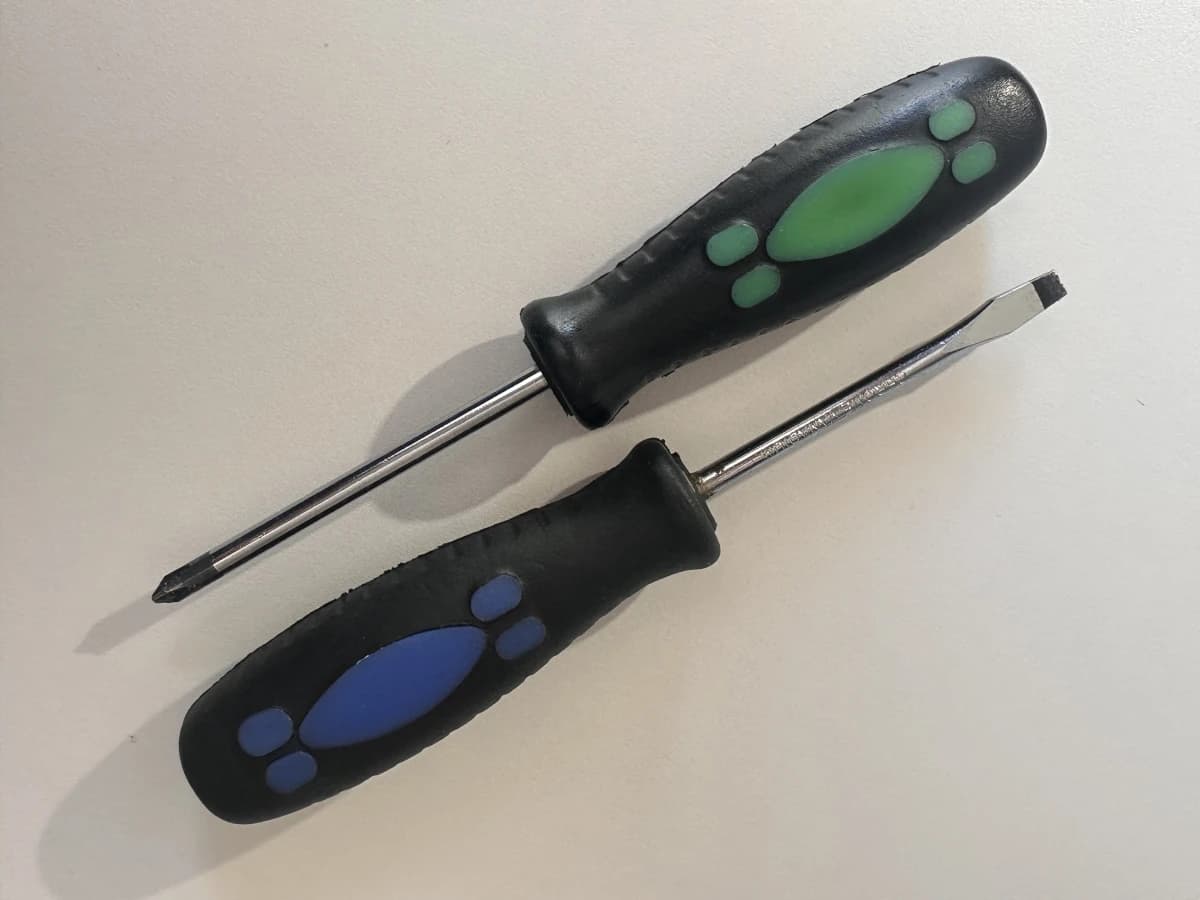
On a recent reddit post, I shared a simple English-German word pair: Screwdriver = Schraubendreher (der).
Immediately, the comments section came alive.
"No-one says that. It's Schraubenzieher." some said.
Others jumped in to defend my choice: "...it's called a Schraubendreher not Schraubenzieher.
Because it doesn't pull, it twists"
In a few hours, a simple vocabulary post turned into a passionate debate about mechanics, tradition, and logic.
The "Screwdriver Effect"
If I had given you a list of 50 tools to memorize, you probably would have forgotten "screwdriver"
by tomorrow. But if you read that comment thread, you will likely never forget these two words.
Why?
Emotion & Engagement: You weren't just reading a list; you were watching a "fight" between
logic and tradition.
Contextual Logic: You now understand why the words are formed the way they are.
You’ve learned the root verbs ziehen (to pull) and drehen (to turn).
Community Learning: You saw real people using the language in a real-world disagreement.
+1: Probably you will start a small research by yourself (as I did too), read about industry standards (DIN-Norm or Ö-Norm), and historical background.
Logic vs. Tradition
As an engineer, I naturally gravitate toward Schraubendreher. It is precise.
It describes the mechanical function of the tool.
However, language isn't always logical. Most people in their daily lives use Schraubenzieher, even if it’s technically "wrong" from a physics perspective.
The Kwila Lesson
This is exactly what we are building at KwilaLearn.
We believe that the best way to learn is through the "Blank Page", by bringing your own real-world experiences, questions, and even your mistakes into the light. When you engage with a word, when you argue about it, laugh about it, or use it to solve a problem at a tyre shop, it stops being a "data point" and becomes a part of your "mental hardware."
Don't just look for the "right" word in a dictionary. Look for the story behind the word.
Whether you are "pulling" or "turning," the most important thing is that you are communicating.